Why Skin Cancer Awareness Starts with Everyday Sun Choices
Skin cancer awareness is really about daily decisions, not just scary diagnoses. May is recognized as Skin Cancer Awareness Month to remind us that the largest organ in our body, our skin, needs steady protection at every age and for every skin tone. Skin cancer happens when skin cells grow in an abnormal, uncontrolled way, often triggered by years of ultraviolet light exposure from the sun or tanning beds. It is one of the most commonly diagnosed cancers, which means this is not a rare, far-off concern.
At Motivo Scar Care, we think about sun safety not only in terms of health but also in terms of how it affects healing scars after surgery, injuries, burns, or acne treatments. Scar tissue can react to sunlight differently than the surrounding skin, often darkening faster, becoming more irritated, or feeling more sensitive. That is why prevention and early detection matter so much. Small habits, like consistent sunscreen use and protective tools such as scar sun protection tape, can help protect your long-term health and support smoother, calmer-looking scars.
Understanding Skin Cancer Risks and Warning Signs
There are three main types of skin cancer that most of us hear about. Basal cell carcinoma often appears as a pearly bump or a pink patch, usually on sun‑exposed areas like the face, neck, and arms. Squamous cell carcinoma can look like a scaly patch, a firm red bump, or a sore that heals and reopens, commonly appearing on the ears, lips, hands, and legs. Melanoma is less common but more serious, and it often appears as a new or changing mole anywhere on the body, including areas that do not see much sun.
Our individual risk is shaped by several factors. These include:
- Frequent or intense sun exposure
- Tanning bed use
- A history of blistering sunburns, especially in childhood
- Family history of skin cancer
- Fair or easily burned skin, light eyes, or red or blond hair
- Certain medications that increase sun sensitivity
- Medical conditions that affect the immune system
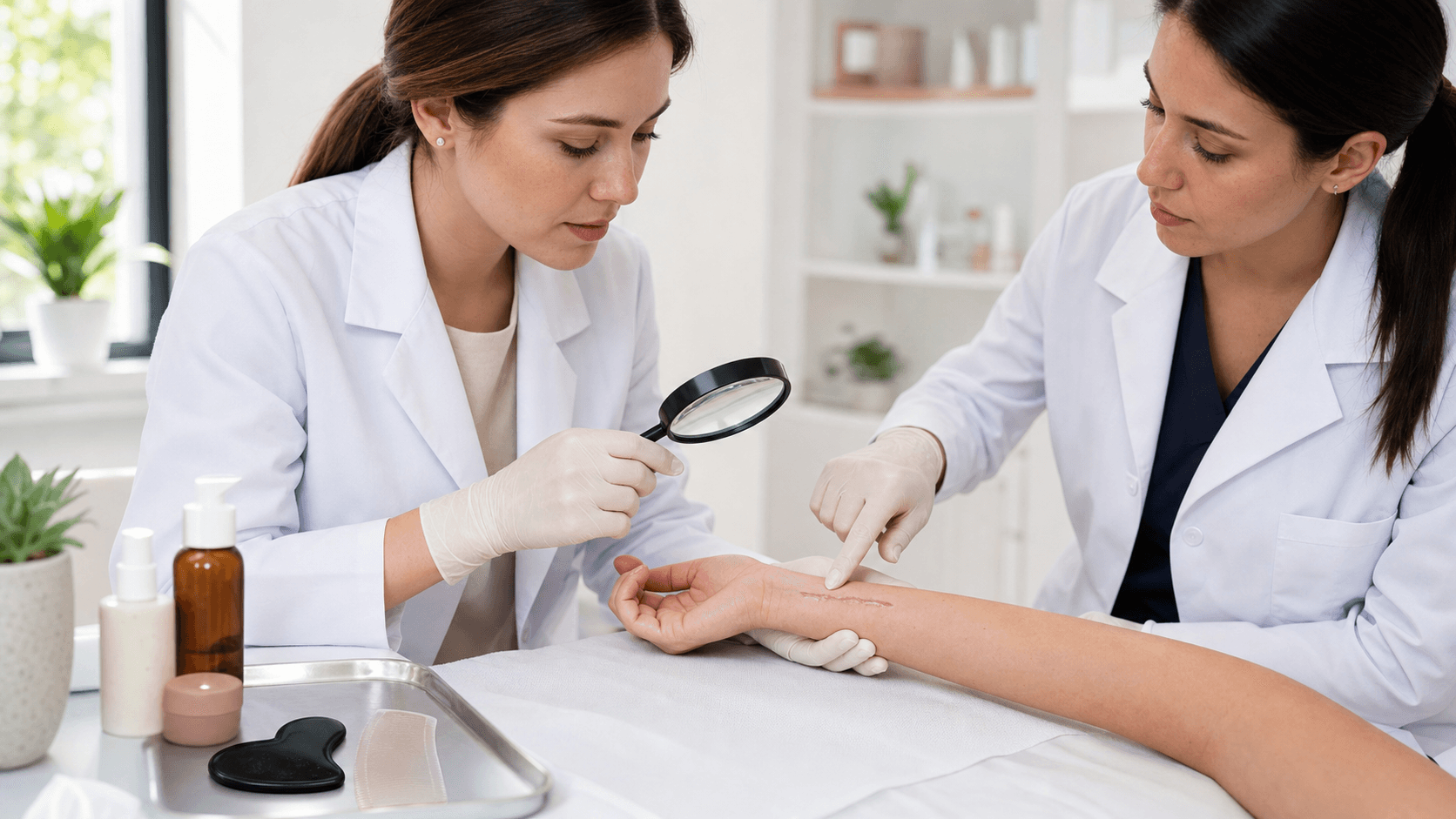
Scars play a special role in this picture. Most scars never become cancerous, and we do not want anyone to feel scared of their own healing. However, areas with old burn scars, chronic irritation, or repeated trauma can sometimes deserve a little extra attention. Scars that are frequently inflamed or pick up a lot of sun can be harder to assess, so regular observation helps.
A helpful tool is the ABCDE guide for suspicious moles: Asymmetry, Border irregularity, Color variation, Diameter that is larger than a small pencil eraser, and Evolving changes over time. On and around scars, also watch for warning signs such as:
- New growths or bumps on the scar
- Areas that do not heal or keep scabbing over
- Rapid changes in color or texture
- Persistent itching, tenderness, or bleeding
Smart Sun Protection for Both Skin and Scars
To understand why protection matters, it helps to know a little about UV radiation. The sun gives off UVA and UVB rays, both of which can damage skin cells. UVB rays are more linked to sunburns, while UVA rays penetrate deeper, contributing to premature aging and long-term DNA changes. Over time, this damage can add up and increase the chance of skin cancer and visible skin changes.
Daily habits make a real difference. Strong strategies include:
- Choosing a broad-spectrum sunscreen with SPF 30 or higher
- Reapplying every two hours, and after sweating or swimming
- Seeking shade between 10 a.m. and 4 p.m., when UV rays are strongest
- Wearing wide-brimmed hats, UV-blocking sunglasses, and protective clothing
- Keeping sunscreen by the door or in your bag so it becomes part of your routine
Healing scars deserve even more focused care. New scars, whether from a C‑section, joint surgery, a burn, or acne treatments, tend to be more reactive in the sun. They may darken quickly, look more red or purple, or become raised and thick. Consistent protection for at least 12 to 18 months after an injury or procedure helps support a smoother, more even appearance over time.
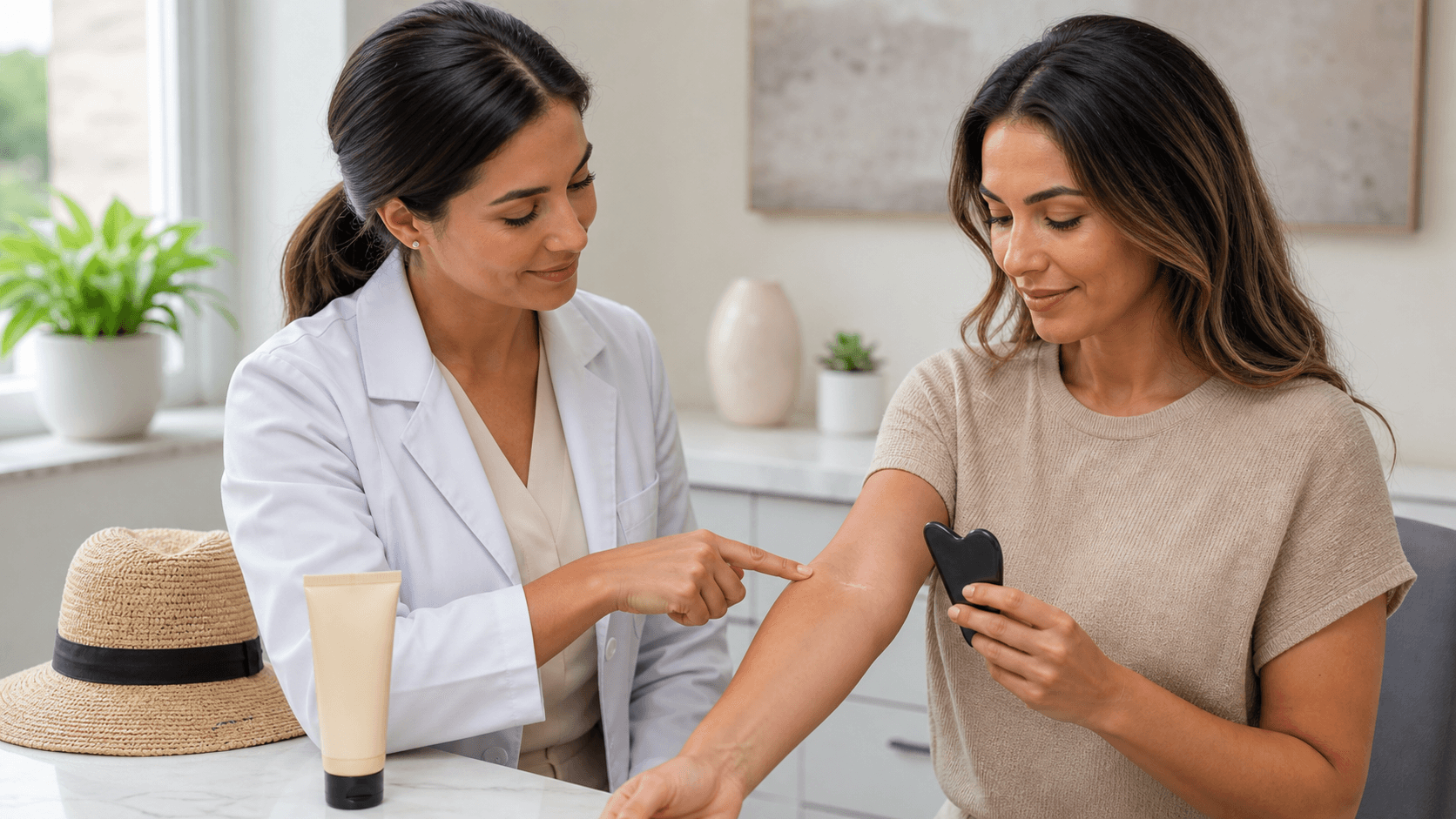
For many people, pairing sunscreen with physical barriers is especially helpful. Scar sun protection tape creates a gentle shield between the scar and UV rays, and can be used alongside a thoughtful scar care routine to support a calmer, more comfortable healing process.
How Scar Sun Protection Tape Supports Safer Healing
Scar sun protection tape is a soft covering designed specifically for healing scars. It provides a physical barrier against UV exposure, friction from clothing, and minor bumps, while helping the skin maintain a stable moisture balance. This combination of shielding and comfort can be especially supportive for fresh surgical lines or scars that are located where clothing rubs.
People recovering from surgery, burns, injuries, or acne procedures may notice several benefits when they use scar sun protection tape as part of their regimen:
- Helping reduce the appearance of redness over time
- Minimizing uneven discoloration caused by sun exposure
- Providing gentle pressure that can support smoother-feeling scars
- Acting as a reminder not to scratch, rub, or pick at the healing area
To use scar sun protection tape wisely, timing and technique matter. The tape should only be applied once the wound is fully closed and your healthcare provider has cleared you to start topical care. Cleanse the area with a gentle, non-irritating cleanser, pat dry completely, and then apply the tape according to product directions. Many people combine tape with physician-recommended scar products as part of a regular routine, always watching for any signs of irritation or allergy.
It is important to remember that scar sun protection tape is one piece of the puzzle, not the whole solution. It supports cosmetic healing and comfort, but it does not replace sunscreen on the surrounding skin, regular skin checks, or follow-up visits with your doctor after any procedure, burn, or injury.
Early Detection Habits That Protect Your Future Self
Prevention and protection are powerful, but early detection is just as important. A simple monthly at-home skin check can fit into everyday life. In good lighting, use a full-length mirror and a hand mirror, and, if possible, ask a partner to help with hard-to-see spots like the scalp and back. Move slowly from head to toe, paying attention to the face, scalp, neck, chest, back, arms, hands, legs, feet, nails, and any noticeable scars.
It can help to document what you see so you have a baseline. You might:
- Take clear photos of moles, spots, and scars
- Note new marks, changing areas, or spots that look different from others
- Track any non-healing scabs or sores
- Record symptoms like itching, tenderness, or bleeding
Contact a dermatologist or physician if you notice any rapidly changing mole, persistent itching or bleeding, a scaly patch that will not heal, or an unusual change in a scar’s color, shape, border, or thickness. Regular professional skin exams are especially helpful if you have multiple risk factors or a personal history of skin cancer. When those exams are paired with daily sun protection and thoughtful tools like scar sun protection tape, you create a more complete defense for your skin.
Turning Awareness Into Everyday Skin-Smart Action
Skin Cancer Awareness Month is a reminder that our daily choices really do matter for both our health and our healing scars. Consistent sun protection, mindful scar care, and routine skin checks are all within reach, and together they can support safer skin and more confident healing.
It is never too late to start treating your skin more kindly. Even small changes, like reapplying sunscreen, covering a healing scar with scar sun protection tape, or finally scheduling that skin exam you have been putting off, can support your future self. At Motivo Scar Care, we believe thoughtful attention today can help your scars and your skin feel healthier, calmer, and better protected for years to come.
Protect Your Healing Scar With Targeted Daily Sun Defense
Support your recovery by choosing dedicated scar sun protection tape designed to shield vulnerable skin from UV exposure. At Motivo Scar Care, we focus on practical, research-informed solutions that fit easily into your everyday routine. Explore our options, then contact us if you have questions about which product is right for your stage of healing.